Aftercare at Home
Aftercare is the time your dog spends recovering at home after a vet visit, boarding stay, grooming appointment, or surgery. The first few days matter, and we share the guidance we give families who call us with questions when their dog comes home.
The First Day at Home
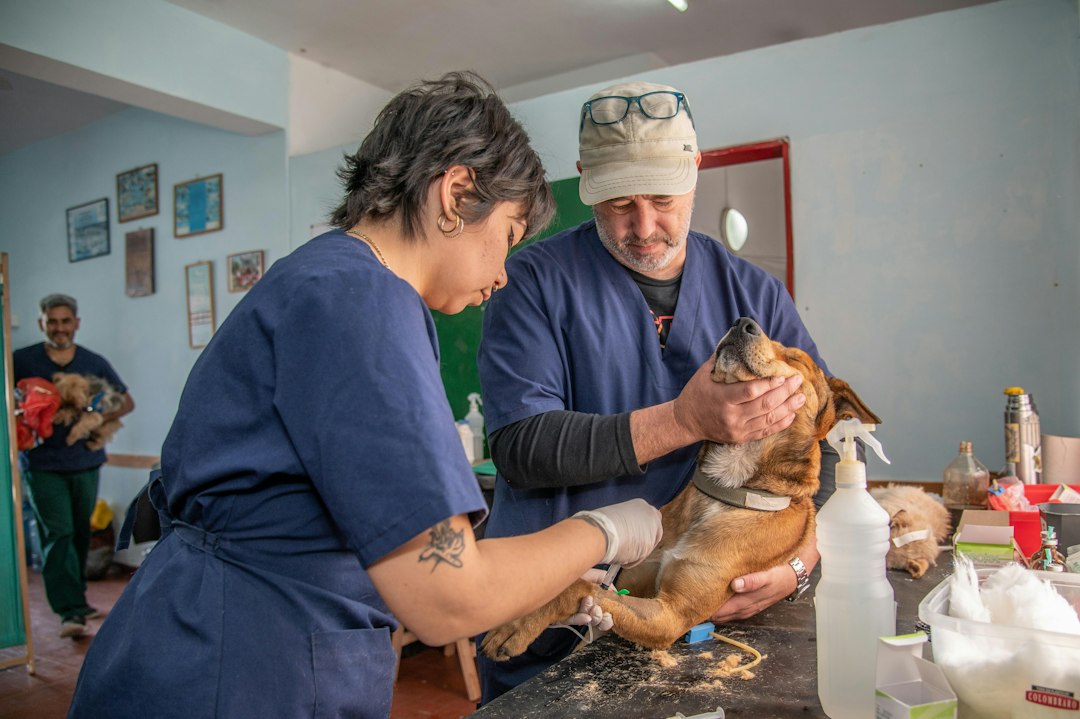
Your dog has had a day that is not normal—a vet appointment with poking and instruments, a boarding stay in a new space, time under anesthesia, or time away from you.
A dog needs one day to decompress. Keep your dog quiet, in a familiar space, with water always available.
Do not schedule a playdate or take them to the dog park. Do not let your dog play hard or run.
If your dog was spayed or neutered, they have stitches or surgical glue holding them together. If they had dental work, their mouth is sore. If they boarded, they experienced a day without you.
All of these need recovery time. Quiet means no rough play, no jumping on furniture, no running up and down stairs.
Appetite and Bathroom
A dog that has been to the vet or boarded might not eat normally for one or two meals. This is common and will pass.
Offer food at the regular time, leave it out for 10 minutes, and pick it up if they do not eat. Do not leave food out all day.
After surgery: Your vet will tell you when your dog can eat. Follow that timing exactly.
After boarding: Offer their regular food and let them settle. Stress and a change of water can cause temporary upset.
Signs That Something Is Wrong
Call your vet if your dog shows vomiting that does not stop after the first meal, or not eating for more than one meal after surgery has healed.
Call for straining to go to the bathroom, lethargy that does not improve after one day of rest, or swelling at a surgical site.
Call for discharge from the nose or eyes beyond one day, or excessive panting and a racing heartbeat.
A dog that seems panicked should be seen by a vet same-day.